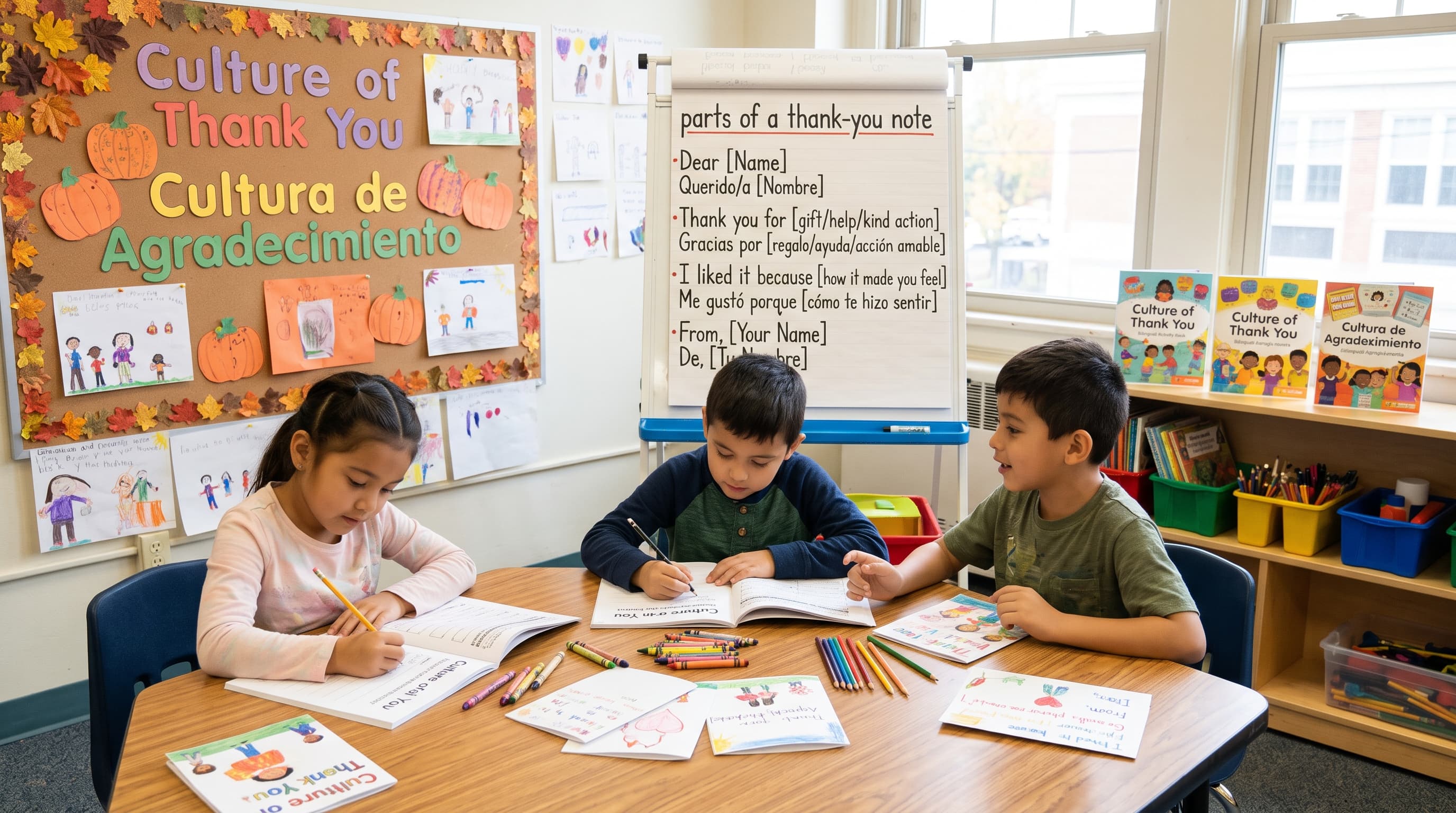
A gratitude craft can bring a warm moment to a classroom or family table, but children need more than one cheerful activity to build everyday courtesy. For children ages 4 to 9, kindness and appreciation become more meaningful when they are practiced often, in simple ways they can use at home, at school, and in their communities.
At Culture of Thank You, we believe gratitude is not just a feeling children should recognize during the holidays. It is a social skill they can practice all year. With October leading into Thanksgiving, classroom celebrations, holiday gatherings, and year-end giving, this is a good time to create routines that last beyond one seasonal lesson. Thank-you note writing is one practical way we help children turn grateful feelings into respectful action.
One-Time Lessons Start Awareness, Not Habits
A single discussion, worksheet, or craft can introduce the idea of gratitude. Children may leave the activity knowing that saying “thank you” is important. Still, knowing the words and using them naturally in real life are two different things.
Young learners often need repeated support to notice kind actions, understand another person’s effort, and choose words that fit the moment. A child may be thankful for help with a project, for example, but need guidance to say more than a quick “thanks.” With practice, they can learn to recognize the care behind that help and respond with courtesy.
When gratitude comes up only around Thanksgiving or gift exchanges, children may start to see it as a holiday expectation. We encourage adults to connect appreciation with everyday moments, including:
 Receiving help from a teacher, parent, sibling, or friend
- Taking turns and sharing materials
- Thanking someone for listening or including them
- Recognizing a volunteer, coach, classroom helper, or neighbor
- Offering an apology after a mistake
One-time activities can also make it hard for adults to see growth. A child may be excited during a gratitude lesson but forget the language a few weeks later. Ongoing practice gives teachers, caregivers, and youth leaders more chances to notice what children understand and where they may need a gentle reminder.
Why Social-Emotional Learning Materials Build Habits
Structured social-emotional learning materials give children a clear path to follow. Rather than asking them to understand gratitude as a big, abstract idea, we can break it into small skills that make sense at their age.
Children can begin by spotting kind actions and naming how those actions make them feel. From there, they can practice polite responses, talk about why another person’s effort mattered, and create a thank-you note of their own. Each step builds on the one before it.
Repetition matters because children learn social skills through use. Flashcards, activity books, guided discussions, and writing activities give them chances to hear, say, read, and use gratitude language again and again. Phrases such as “Thank you,” “I appreciate your help,” and “It was kind of you to think of me” become easier to remember when children see them in different settings.
Our manuals, activity books, and flashcards support this kind of repeated learning in English and Spanish. Teachers, homeschool families, schools, youth leaders, and community groups can use shared language while adjusting activities for different ages, reading levels, and group needs. A consistent approach helps children understand that courtesy belongs everywhere, not just in one lesson.
Move From Feelings to Thank-You Note Skills
Gratitude becomes more personal when children learn to look beyond what they received. We encourage them to notice the thought, time, care, or effort behind a gift or helpful action.
For instance, a child can thank a grandparent not only for a present, but also for choosing something that matches the child’s interests. They can thank a classmate not only for sharing supplies, but for noticing that help was needed. This small shift helps children think about another person’s point of view.
A simple thank-you note routine gives beginning writers a steady framework:
- Name the person you are thanking
- Say what the person did or gave
- Explain why it mattered to you
- End with a kind closing message
That structure can lower the pressure of writing while leaving plenty of room for personality. Younger children may draw a picture, copy a few words, or dictate a message to an adult. Older children can add details, practice letter format, and choose words that sound like them.
Thank-you note writing brings several social-emotional skills together. Children practice perspective-taking when they think about another person’s effort. They practice communication when they choose clear words. They also practice responsibility when they complete and deliver the note. Perfection is not the goal. Sincere appreciation is.
Make Fall Gratitude Practice Part of Every Week
October and November can be a helpful starting point, but they do not need to be the finish line. A small weekly routine can show children that gratitude belongs in ordinary moments, not only at holiday celebrations.
In a classroom, you might set aside time for a gratitude discussion prompt, a courtesy role-play, or a thank-you note station. Homeschool families can add a short appreciation activity to language arts, reading time, or a family routine. Youth leaders can connect gratitude with service projects, team activities, and recognition for volunteers.
Predictable practice helps children know what to expect. When they regularly talk about kind actions and respectful words, they have more time to try the skills, receive encouragement, and grow more confident. Using the same social-emotional learning materials over several weeks can also reduce planning pressure for adults while keeping the learning clear and age-appropriate.
Bilingual English and Spanish resources can help more children and families take part with confidence. Whether the setting is a school, a home, or a community group, shared words and routines make it easier to carry gratitude from one place to another.
Choose a Routine That Makes Thanks Stick
A single seasonal lesson can open the door, but repeated action helps appreciation become part of a child’s everyday behavior. We recommend choosing one manageable routine, such as a weekly courtesy activity, a short gratitude prompt, or guided thank-you note practice, and returning to it consistently.
Lasting gratitude grows when children have the language, confidence, and social awareness to express it in real moments. With regular practice, saying thank you can become more than a reminder. It can become a thoughtful way children relate to people at home, at school, and throughout their communities.
Build Everyday Social-Emotional Skills
At Culture of Thank You, we create practical resources that help educators and families support meaningful skill-building over time. Discover our social-emotional learning materials to bring engaging, age-appropriate activities into everyday routines. Give children tools they can use to strengthen communication, empathy, and positive relationships.