5 min read
Homeschooling Beyond Academics: Teaching Children Gratitude, Kindness, and Appreciation
06 November 2026
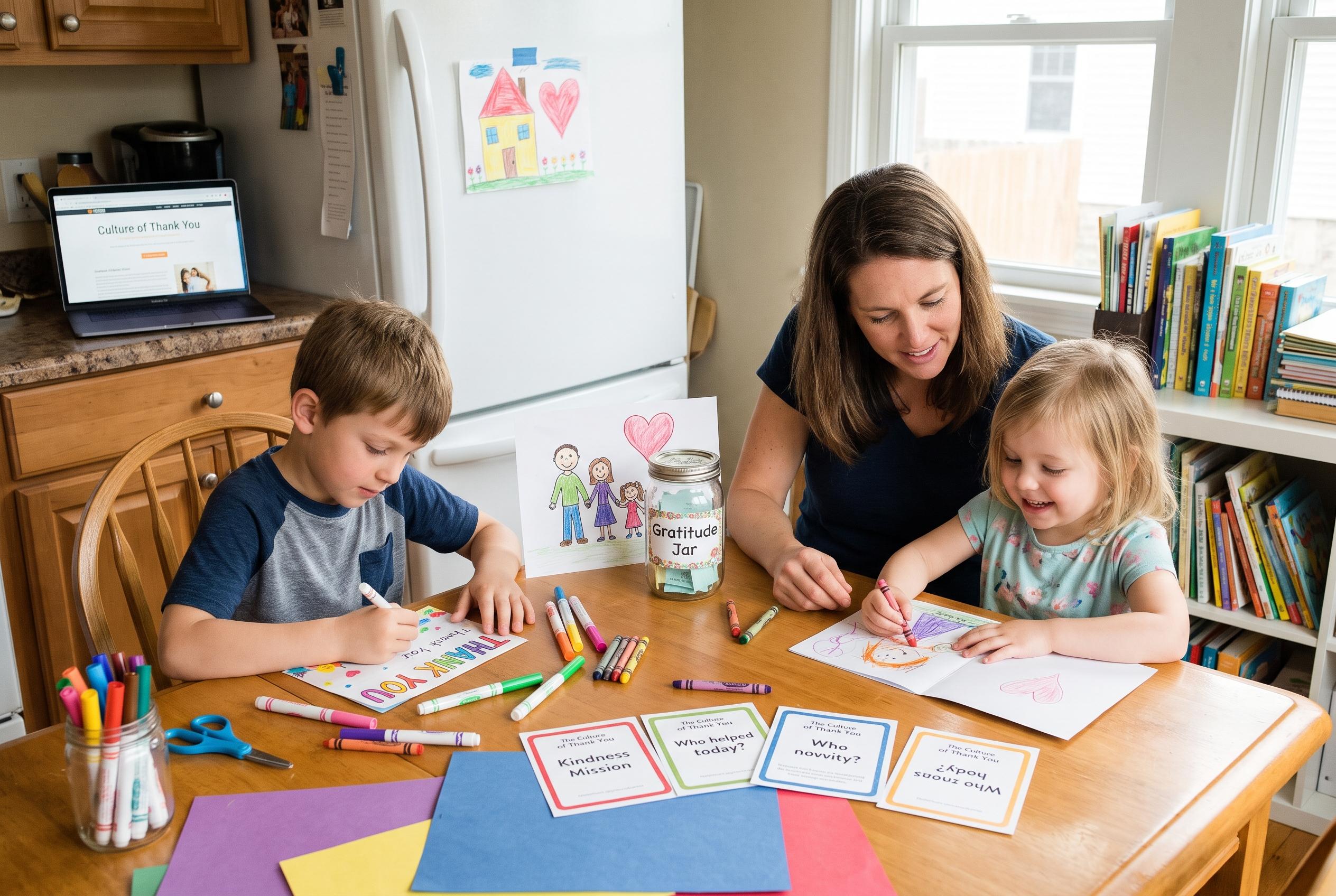
The homeschool day can teach far more than reading and math.
Homeschooling gives families unique flexibility: a meaningful lesson can happen at the kitchen table, during a morning nature walk, while sharing a story, or through casual conversation after lunch. That flexibility creates space for an essential part of childhood development that is easy to overlook—helping children notice others, appreciate what they receive, and respond with genuine kindness.
Academic subjects matter, but children are also learning how to participate in a family, a classroom, and a broader community. Gratitude is an everyday social skill that can be practiced alongside literacy, science, art, and life skills. It is not simply memorizing the words “thank you.” It involves noticing what someone has done, understanding why it matters, and finding an authentic way to express appreciation.
What Makes an Effective Homeschool Gratitude Resource?
A good homeschool resource should be easy to use, age-appropriate, and flexible enough to fit the natural rhythm of family life. It should give children something interactive to do—not just pages to read—and help parents easily turn an abstract idea into meaningful conversations and small actions.
For hands-on gratitude lessons, the most effective materials include:
 Visual picture prompts that encourage observation and empathy
- Engaging activity sheets focused on real-world actions
- Thoughtful discussion questions that connect with daily life
- Handmade thank-you notes tailored for family and community helpers
- Simple, mission-based challenges children can complete at home
Younger learners (ages 4–6) often thrive by drawing pictures or choosing visual cues, while older children (ages 7–9) are ready to write sentences explaining specifically why they appreciate someone.
The Culture of Thank You program is designed specifically for children ages 4–9 (Pre-K through 4th grade). It uses a hands-on approach built around missions, activities, and meaningful conversations. The core program includes:
- The Operation Thank You Manual (step-by-step guidance for parents and educators)
- The Activity Book (focused on the why and how of saying thank you)
- A 30-Card Flashcard Set (prompts that spark daily appreciation)
For home educators, the program offers a dedicated Complete Package for Home-Schoolers and Parents, making it simple to implement without hours of prep work.
5 Simple Gratitude Activities to Add to Your Homeschool Week
1. The Gratitude Picture Prompt
Choose an illustrated flashcard or draw a simple scene together. Ask your child:
“Who helped someone in this picture?”
“What could the child say or do to show appreciation?”
Invite younger children to draw their answer if their writing skills are still developing.
2. The "Reason Why" Thank-You Note
Help your child create a card for someone who did something thoughtful. Encourage them to go beyond a generic “thank you” by highlighting the specific reason:
What did the person do?
How did it make you feel, or how did it help you?
Your child can dictate the words, write them independently, or add an illustration.
3. The Home Helper Mission
Focus on one person who actively contributes to the household—a sibling who shared a toy, a parent who prepared a meal, or a neighbor who waved hello. Work together on a thoughtful surprise mission, such as tidying a shared space, helping with a chore without being asked, or leaving an appreciation sticky note.
4. The Gratitude Walk
Turn outdoor time or nature study into an appreciation exercise. As you walk through your neighborhood or local park, look for everyday helpers and community assets: a clear sidewalk, a shade tree, postal carriers, or the local librarian. When you return home, discuss who helps make those good things possible.
5. The Weekly Family Reflection
At the end of each week (perhaps around Friday dinner), invite everyone to share:
- One person they appreciated this week
- One helpful thing they noticed someone do
- One kind action they took themselves
Keep it light, brief, and encourage the adults to participate too.
How to Integrate Gratitude Across Core Subjects
Gratitude does not need to be an isolated, time-consuming subject. Natural touchpoints exist across your existing curriculum:
Language Arts: Dictate, draft, or write heartfelt thank-you letters; practice descriptive vocabulary centered on feelings and kindness.
Art: Design customized appreciation cards, draw comic strips showing helpful acts, or illustrate family members helping one another.
Social Studies: Study community helpers (firefighters, farmers, sanitation workers, healthcare staff) and discuss how each role sustains daily life.
Science & Nature Study: Observe the systems that provide clean water, fresh food, parks, and habitats, encouraging stewardship and appreciation for the natural world.
The goal is not to turn every lesson into a lecture. Look for natural everyday moments and let your children lead with their own questions.
Letting Children Learn at Their Own Pace
A four-year-old often understands gratitude through concrete, immediate experiences: a grandparent sharing a snack, a friend taking turns, or someone helping tie their shoes.
Older children can begin to understand the deeper intention, time, and effort behind an act of kindness. Because children develop empathy at different stages, keep expectations flexible and focus on regular practice rather than perfect responses.
Research from Harvard’s Making Caring Common project emphasizes that children learn caring and gratitude when they are encouraged to:
- Notice what they appreciate
- Think about why it matters
- Share their feelings clearly
- Practice it until it becomes second nature
Parents can reinforce this naturally by modeling verbal gratitude throughout the day:
“Thank you for helping put the library books back in the basket. It made our room so much easier to use.”
Bring Gratitude Into Your Daily Homeschool Routine
Children do not need complex lesson plans to learn the power of appreciation. A few minutes spent noticing someone's hard work, crafting a personal note, or completing a kindness mission turns abstract character building into tangible everyday habits.
If you are looking for structured, ready-to-use materials to guide your family, explore the Culture of Thank You Complete Homeschoolers Package. Equipped with the Operation Thank You Manual, activity workbooks, and conversation-starting flashcards, it gives your family everything needed to turn gratitude into a lifelong habit.