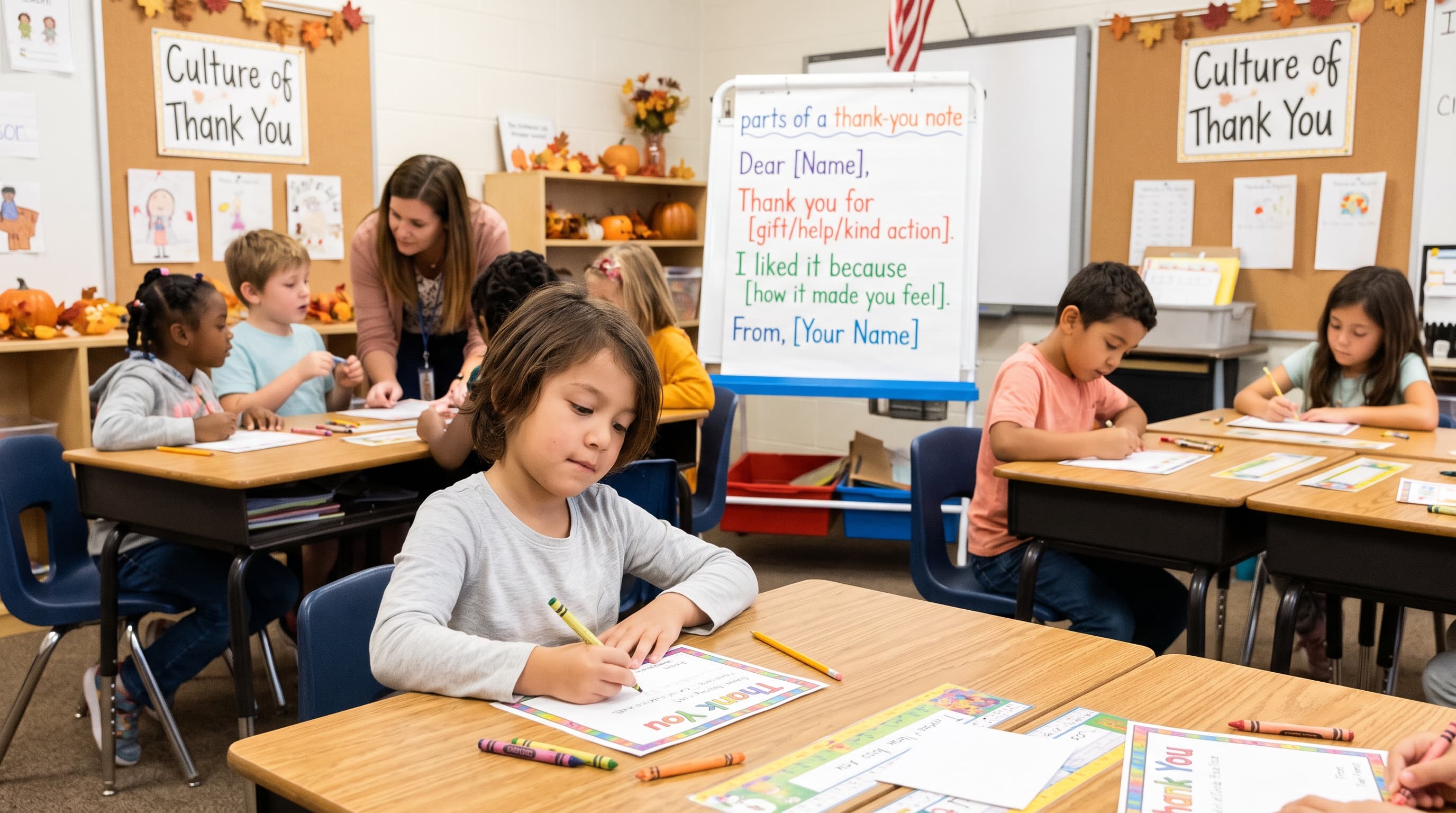
Thank-you notes can look like a small assignment to adults, but for children ages 4 to 9, they may feel like a big challenge. A child can feel thankful and still have no idea how to put that feeling into words, letters, and sentences.
At Culture of Thank You, we believe resistance to writing a note often points to a missing skill, not a lack of gratitude or good manners. When you break the process into small steps, offer helpful language, and leave room for each child’s own voice, gratitude writing becomes much less scary. The goal is not a perfectly written note. It is helping children share appreciation with growing confidence.
Spot the Barriers Behind Avoided Thank-You Notes
“I don’t know what to write” is often a child’s way of saying, “I need help getting started.” Younger students may understand that someone did something kind, yet not have the words to explain why it mattered. An older elementary student may know exactly what they want to say but worry about spelling, handwriting, or whether the note sounds good enough.
A blank page can create a lot of pressure. Before we expect a child to write a complete note independently, we recommend noticing what is making the task feel hard. Incomplete notes, copied sentences, or requests for an adult to supply every word are opportunities to give support, not reasons to assume a child is being disrespectful.
Children in one classroom will need different kinds of help. Some may be ready to write several sentences, while others may need to say their idea aloud first, draw a picture, or dictate their words to an adult.
Helpful supports can include:
 Visual prompts that show the parts of a note
- A chance to practice the message aloud with a partner
- Sentence starters that remove the pressure of beginning
- Drawing time before writing
- A scribe for children who need help getting words onto paper
English language learners, children with fine motor needs, and students with learning differences may especially benefit from flexible participation. When you identify the real barrier, you can help every child take part in expressing thanks.
Use Thank-You Note Writing Activities to Build Skills
Thank-you note writing activities work best when they are not saved for one holiday or one special event. Like reading, sharing, and taking turns, gratitude writing is a skill that gets easier with calm, repeated practice. We encourage teachers to treat it as a routine classroom activity rather than a one-time test of manners.
Start with a simple structure children can remember. A classroom model can show that a warm note does not need to be long. Children can name the person, describe the gift, action, or kindness, explain why it helped or made them happy, and add a closing.
For example, you might guide students through these parts:
- Dear [recipient’s name]
- Thank you for [gift, help, or kind action].
- I liked it because [personal detail or feeling].
- From, [child’s name]
Before students pick up a pencil, let them talk. Invite partners to finish the prompt, “Thank you for _ because _.” As children share ideas, write a few examples on chart paper. Point out how details make a note feel personal. “Thank you for helping me” is kind, but “Thank you for helping me find my lost folder” helps the recipient understand what mattered.
Different levels of writing can all belong in the same activity. Emerging writers can draw a picture and dictate a message. Developing writers can choose from sentence frames. Confident writers can add a favorite memory, a feeling, or a question for the recipient. These thank-you note writing activities keep the focus on appreciation instead of making children feel limited by spelling or mechanics.
Make Gratitude Practice Easy During the Fall Season
October is a wonderful time to begin gratitude practice at school. Fall routines are settling in, and there is time to build skills before Thanksgiving events, classroom celebrations, and busy holiday schedules arrive. Starting early also means children are less likely to face a stack of notes they feel rushed to complete.
A weekly gratitude moment can make a lasting difference in how children notice kindness around them. We suggest choosing one simple prompt each week and giving students a few minutes to talk, draw, or write. Small moments of practice show children that appreciation is not only for gifts or holidays. It is something they can share all year.
Authentic fall recipients might include:
- A librarian who helps students find books
- A custodian who prepares a clean classroom
- A bus driver who helps children get to school safely
- A family member who supports homework or reading time
- A community helper noticed during a fall nature walk
You can also bring thank-you note writing into service projects, Thanksgiving plans, and classroom celebrations. Because students have practiced the steps ahead of time, they can focus on their real message instead of worrying about what comes next.
Help Every Child Share Thanks with Confidence
Gratitude writing becomes part of classroom culture when children see it as something they can do, not something they have to do perfectly. We encourage you to choose one small routine, such as placing sentence starters in a writing center, setting aside a weekly gratitude prompt, or using a structured lesson that matches young learners’ needs.
A completed note represents much more than a writing task. Each message gives a child practice noticing kindness, naming positive feelings, and strengthening a relationship at school, at home, or in the community. Over time, those small notes can help children see that their words have the power to make someone else feel seen and appreciated.
Build Confidence With Ready-to-Use Resources
At Culture of Thank You, we make it easier to guide children through meaningful practice without adding pressure to the process. Discover our thank-you note writing activities for practical tools that support students at different ages and writing levels. Use them to create a simple, encouraging routine that fits naturally into your classroom or home.