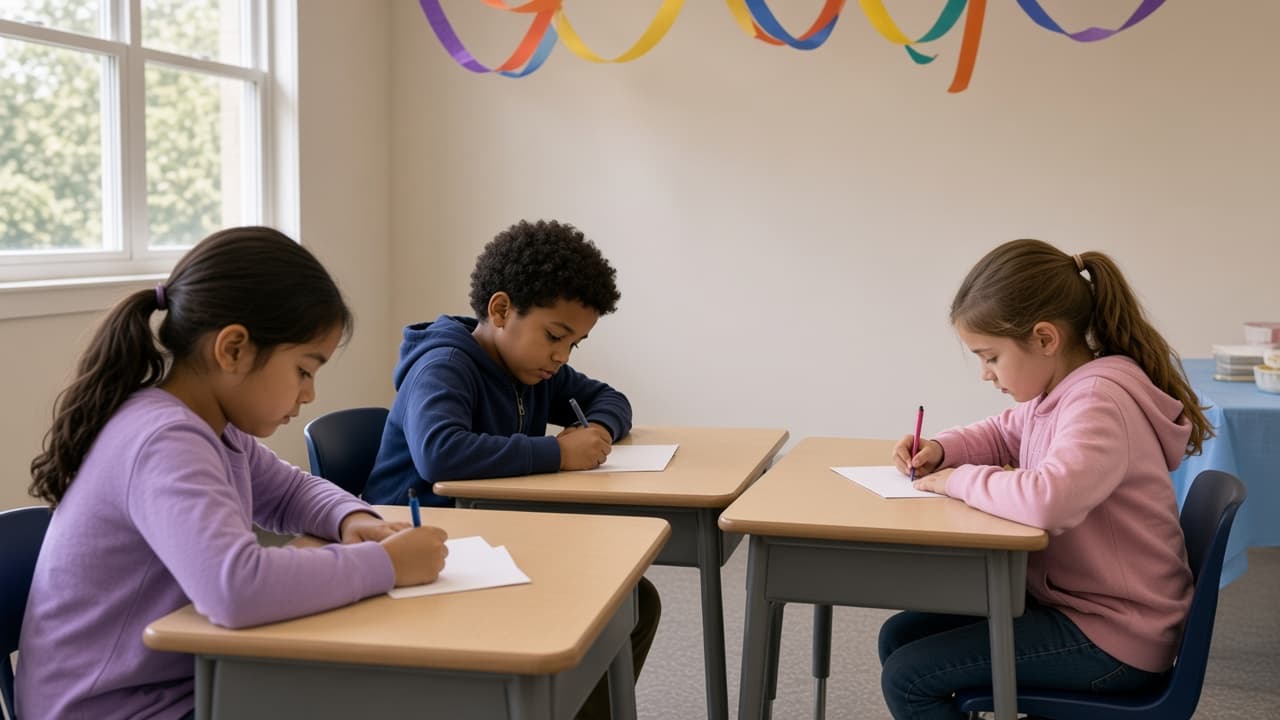
Thank-you cards for kids turn the happy blur of a classroom party into a meaningful lesson about noticing kindness. After games, snacks, crafts, music, and shared laughs, children have a chance to slow down and remember the people who helped make the celebration possible.
At Culture of Thank You, we believe gratitude does not need perfect handwriting, fancy cards, or grown-up wording. For children ages 4 to 9, the goal is simpler: notice something kind, say what they liked, and share sincere appreciation in a way that feels natural.
Turn Party Fun Into a Lasting Gratitude Lesson
Holiday classroom parties bring plenty of excitement, and that is part of the fun. Yet the day after a celebration can be just as valuable. Instead of moving on quickly, we encourage you to help children reflect on the kindness, planning, and generosity behind the party.
A thank-you card gives children a small, concrete way to respond. They learn that treats did not simply appear, games did not run themselves, and decorations often came from someone’s time and care. That realization helps gratitude feel less like a rule and more like a response to something real.
The message can be short. A child might write, “Thank you for our party,” or “I liked the cookie decorating.” A drawing of the favorite game or craft can say a lot, too. What matters is that children connect a kind action with a thankful response.
Set a Simple Goal Before the Party Begins
Before the celebration starts, we recommend that teachers, room parents, and youth leaders decide who may deserve recognition afterward. A little planning makes thank-you cards for kids much easier because children will have clear people and moments to remember.
Possible recipients may include:
 Parent volunteers who set up, cleaned up, or led activities
- Classroom aides, office staff, or other school helpers
- Families who donated supplies, snacks, or craft materials
- Guest readers or older students who helped with games
- Anyone who decorated the room or made the group feel welcome
Keep a quick list during the event. It can be as simple as a note with volunteer names, donated items, and favorite activity stations. When card time arrives, you will not have to rely on children remembering every detail after a busy day.
Seasonal celebrations also work best when gratitude stays welcoming and inclusive. Your group may hold a winter gathering, fall party, or end-of-year celebration without assuming every child observes the same holiday. We encourage messages that focus on help, generosity, fun, and time together rather than one particular tradition.
Help Children Remember Kind Moments
A short group conversation before the paper and crayons come out can make all the difference. Children often need a few minutes to sort through their memories. Instead of facing a blank card and hearing, “Write a thank-you,” they can build ideas together.
Try asking questions such as:
- Who helped make our party happen?
- What was your favorite activity?
- What is one kind thing someone did for our class?
- Which snack, game, or craft would you like to thank someone for?
- How did a helper make the party more fun?
Specific details make a card feel personal. A child can thank a volunteer for leading a game, a family for sending fruit or cookies, or a staff member for hanging decorations. Even a young writer can complete a sentence like, “Thank you for helping with our party,” or, “I liked the snowflake craft.”
Not every child will communicate gratitude in the same way, and that is okay. Some children may draw a picture, dictate a message to an adult, choose from a sentence starter, or add a name stamp. In bilingual classrooms, Spanish-language sentence supports can help children and families share thanks in the language that feels most comfortable.
Make Thank-You Cards for Kids Easy to Write
Children do best when the task is broken into small pieces. We teach a simple card pattern that gives young writers a clear path without making their message sound stiff or copied.
A card can include four easy parts: a greeting, a thank-you statement, one personal detail, and the child’s name. For example: “Dear Ms. Lee, thank you for helping with the games. I liked playing bingo. From, Sam.” It is short, warm, and complete.
You can match support to each child’s stage of writing. Younger children may trace their names, select picture prompts, dictate their words, or draw what they enjoyed. Older children may be ready to write two or three sentences about the activity and the helper’s role.
Keep the materials cheerful but practical. Folded cardstock, crayons, markers, stickers, stamps, and a few seasonal design choices are plenty. The goal is not to create another big craft project. Hands-on card materials help children connect gratitude with action while giving you a calm, useful activity after a full celebration.
Create a Calm Post-Party Routine
Timing matters. We recommend setting aside a gratitude block within a day or two of the party, while details are still fresh. About 20 minutes can be enough time to talk, create, and begin delivering cards. That quieter routine can help children settle back into the classroom after holiday excitement.
You do not need to make every card individual. One class card may be the right choice for a volunteer who supported everyone. Individual cards can work well when a child wants to thank someone connected to a favorite activity. This flexible approach keeps the project manageable while still making room for sincere messages.
Delivery can be simple, too. Cards may go home with children, be placed in school mailboxes, handed to volunteers at pickup, or mailed as a class. If you cannot identify or reach every helper, children can make a general card for “Our Party Helpers” and display it in the classroom or school office.
Keep Gratitude Growing Beyond the Holiday Season
A classroom party is only one chance to practice appreciation. When children learn to notice effort, name what they enjoyed, and follow through with a card or message, they build a habit they can use after field trips, birthdays, class projects, and everyday acts of kindness.
Keeping a small supply of cards, sentence starters, and child-friendly gratitude activities nearby makes thoughtful responses easier all year long. A few minutes of reflection after someone helps the group can show children that saying thank you is not just something they do after a holiday party; it is a caring way to treat people every day.
Make Thank-You Notes Easy for Young Writers
At Culture of Thank You, we create simple, meaningful options that help children share appreciation in their own words. Choose thank-you cards for kids that make it easy to recognize classmates, teachers, and party helpers. Keep a few on hand so your child is ready to turn a kind gesture into a heartfelt note.