4 min read
BUILDING STRONGER PARENT-CHILD CONNECTIONS THROUGH EVERYDAY GRATITUDE ACTIVITIES
12 November 2026
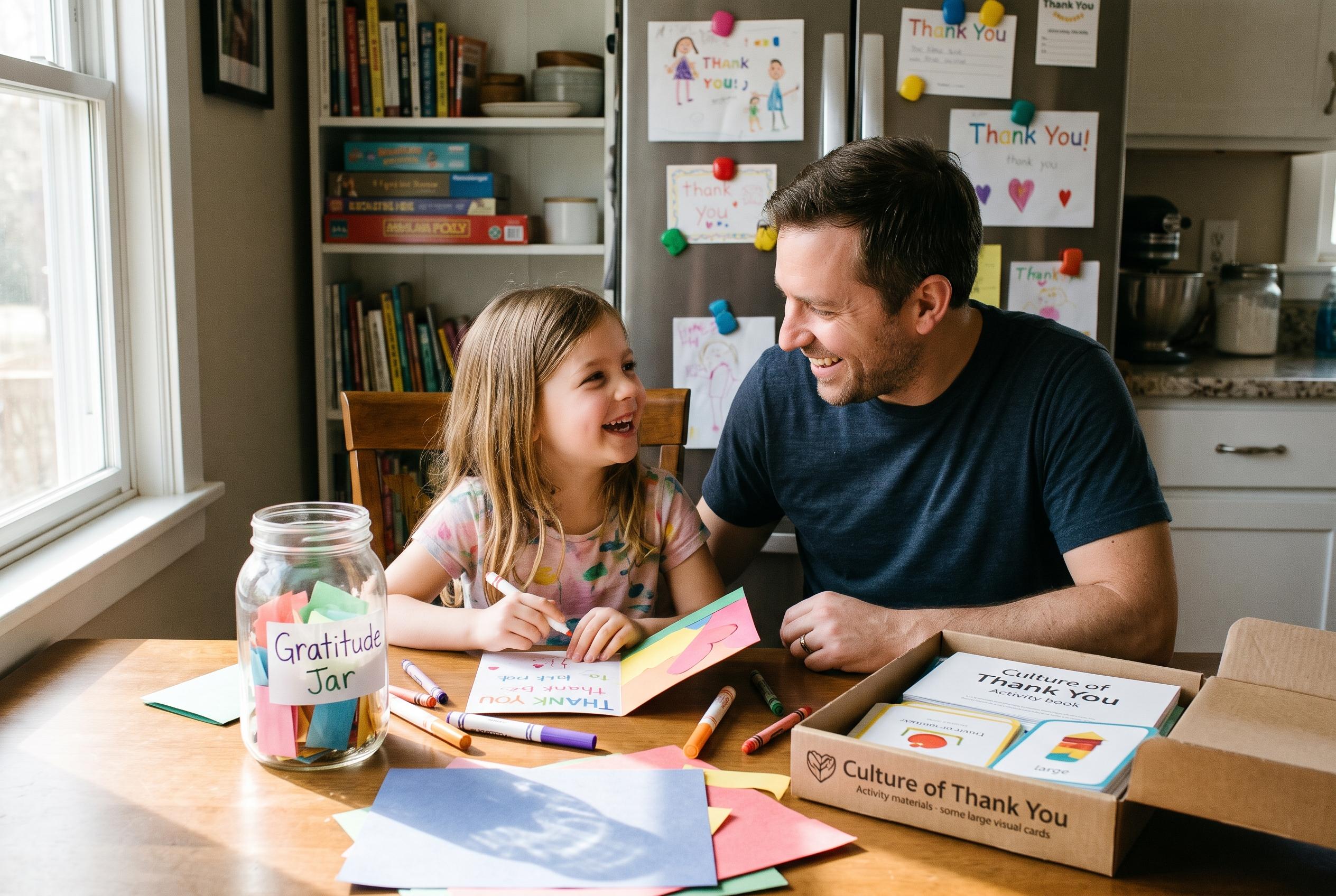
Connection grows in ordinary moments
Strong parent-child connections are not built only through big outings, special occasions, or carefully planned activities. They also grow through everyday moments: listening to a child explain a drawing, sharing a story before bed, preparing a meal together, or noticing when someone has been helpful.
Gratitude can make these moments more intentional. When a parent and child pause to recognize a kind action, talk about why it mattered, and decide how to respond, they practice attention, communication, and appreciation together. The goal is not to make a child say “thank you” on command. It is to help them understand the meaning behind those words.
MOVE BEYOND MANNERS TO MEANINGFUL APPRECIATION
Polite words are useful, but gratitude is deeper than a quick response. It includes noticing what someone has done, thinking about the effort or care involved, feeling appreciation, and expressing it in a way that is sincere.
For example, instead of stopping at “Say thank you to Grandma,” a parent might say:
“Grandma remembered that you love this book and brought it for you. What do you think was thoughtful about that?”
Give your child time to respond. If they are not ready to explain, model an answer without turning the moment into a test.
FIVE PARENT-CHILD GRATITUDE ACTIVITIES TO TRY TOGETHER
1. The two-minute appreciation check-in
At dinner or bedtime, take turns sharing one thing someone did that made the day easier or happier. Parents should share too. Children learn that gratitude is something the whole family practices.
2. Make a thank-you card together
Let your child choose the colors, draw a picture, and decide who should receive it. Ask what the person did and what your child wants them to know. For younger children, write down their words as they dictate.
3. Create a family gratitude jar
Keep slips of paper and pencils near a jar. Family members can add a note or drawing whenever they notice something thoughtful. Read a few together at the end of the week. Avoid making it a competition or requiring a minimum number of notes.
4. Notice-and-return kindness
When someone helps your family, talk about the action and choose a suitable response: a thank-you message, helping in return, or simply expressing appreciation in person. This helps children connect gratitude with thoughtful behavior.
5. Take a gratitude walk
Walk around your neighborhood or home and notice people, places, and small things that make life better. Ask open questions:
 “Who helps keep this place safe?”
- “What did you enjoy seeing today?”
Let your child lead some of the conversation.
WHY DOING IT TOGETHER MATTERS
A shared activity creates a natural reason to talk. A child may open up while drawing a card more easily than when an adult asks a series of direct questions. The activity gives both people something to focus on, while the conversation can develop at the child’s pace.
Research-informed guidance from Harvard’s Center on the Developing Child describes responsive, back-and-forth interactions between children and caring adults as important to early development. These everyday exchanges—notice, respond, listen, and take turns—are useful reminders that connection is built through repeated moments of attention, not one perfect conversation.
Harvard’s Making Caring Common also encourages adults to model gratitude and help children think about the “why” behind appreciation. A parent who says, “I appreciated that you waited while I finished my call; it helped me,” gives a child a concrete example of how to recognize another person’s actions.
HOW "CULTURE OF THANK YOU" CAN SUPPORT FAMILY PRACTICE
The Culture of Thank You is a hands-on gratitude program for children ages 4–9. The program describes its approach through missions, activities, and conversations that help children notice, appreciate, and acknowledge the good in their lives. Its materials include an activity book, flashcards, and an Operation Thank You Manual, with products listed in English and Spanish.
Parents can use a structured resource like this to give family conversations a starting point. A mission or prompt can lead to a shared activity, a thank-you note, or a discussion about someone who has made a positive difference.
The most important part is what happens around the resource: parents listening, sharing their own examples, and giving children room to respond in their own words.
KEEP IT WARM, SIMPLE, AND PRESSURE-FREE
Children may not always know what to say. Some will draw, some will talk, and some may need an adult to offer an example first. Avoid using gratitude to dismiss difficult feelings or to make children feel guilty for wanting something. A child can be disappointed and still learn to appreciate someone’s effort. Both feelings can exist at once.
Consistency matters more than complexity. One short conversation, repeated over time, can become a familiar family ritual. Let appreciation be genuine, specific, and shared by everyone—including the grown-ups.
THE LASTING VALUE OF BEING NOTICED
When parents and children notice kindness together, they are doing more than practicing good manners. They are creating opportunities to listen, understand one another, and recognize the care that exists in everyday life.
A handmade card, a short conversation, or a small helpful action can become a meaningful moment of connection—and a simple way to grow a family culture of thank you.
EXPLORE MORE
Discover family-friendly gratitude activities and materials: Explore the Culture of Thank You Home-School & Parent Packages.